
If you walk into a school, an urban pediatric clinic, or scroll through corporate wellness webinars in metropolitan India today, you will notice a massive, welcome shift. The word neurodiversity is finally shedding its status as an obscure medical term and entering mainstream conversation. Parents are sharing resources on WhatsApp groups, young adults are finding communities on social media, and schools are slowly setting up resource rooms.
This boom in awareness is historic. For decades, children who processed the world differently were simply labeled as slow, stubborn, or difficult. Today, we have a growing vocabulary to understand them, and the stigma is slowly beginning to crack.
However, as this conversation gains momentum across India, it is hitting a significant bottleneck. In the public imagination, the concept of being neurodivergent has become almost entirely synonymous with just two conditions: Autism and ADHD. While these are incredibly important pillars of the movement, treating them as the entire spectrum does a profound disservice to thousands of families across the country who are dealing with distinct, overlooked biological realities. It is time to expand the Indian neurodiversity narrative and understand what lies beneath the surface.

Beyond the Trend: The True Architecture of the Spectrum
To move the conversation forward, we first need to re-examine what the neurodiversity paradigm actually means. Coined by sociologist Judy Singer in the late 1990s, neurodiversity is the idea that neurological differences are simply natural variations of the human genome. Just as we do not view differences in height or eye color as inherent defects, we should not view atypical brain wiring as a baseline failure of human biology.
The problem arises when the public treats the neurodiversity spectrum as a straight line running from normal to severe. In reality, the spectrum functions much more like an audio mixing board. Different sliders represent distinct neurological traits—such as sensory processing, executive functioning, motor coordination, and social communication—and each slider is dialed to a completely different level for every individual.
When we reduce this rich, complex biological tapestry to just a couple of familiar terms, we fall into a dangerous trap. We begin evaluating neurodivergent individuals entirely on their surface behaviors rather than understanding the deep, underlying biological foundations that shape how their brains are built.
The Genetic Foundations of Different Brains
When we limit our focus to behavioral diagnoses like autism, we often miss a critical piece of the puzzle, which is the literal biological blueprint. Many neurodivergent expressions are not stand-alone behavioral quirks; they are rooted in specific, identifiable genetic conditions.
In India, when a child struggles to speak, throws intense tantrums, or cannot sit still in a classroom, the immediate response from aware educators or pediatricians is often to recommend a behavioral assessment for autism. If the child fits the criteria, therapy begins. While early intervention is fantastic, stopping at a behavioral label can act as a clinical dead-end.
Conditions like Down syndrome, Williams syndrome, Angelman syndrome, and various rare genetic mutations are fundamental parts of the neurodiversity spectrum. They share a profound overlap with autistic and ADHD traits, yet they carry completely distinct clinical pathways, medical associated conditions, and developmental trajectories. By ignoring the genetic foundations of neurodiversity, the Indian medical and educational systems are frequently trying to treat the smoke while completely missing the fire.
The Fragile X Intersection: Misdiagnosis in Mainstream Clinics
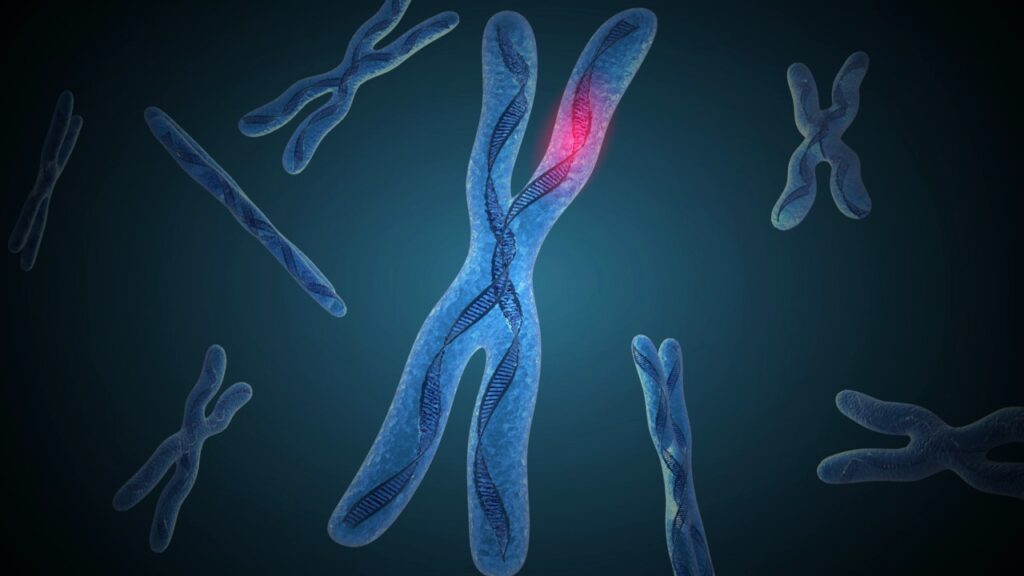
Nowhere is this diagnostic blind spot more evident than in the case of Fragile X Syndrome. This genetic condition is caused by a mutation in the FMR1 gene on the X chromosome, which prevents the body from making a specific protein that is vital for normal brain development and the brain’s ability to change and adapt. Globally and within India, Fragile X Syndrome is recognized as the leading inherited cause of intellectual disability and the leading known genetic cause of autism. Yet, millions of everyday Indians have never even heard the term.
Because Fragile X Syndrome manifests through behaviors that perfectly mimic other conditions, thousands of children across India are currently misdiagnosed or underdiagnosed. A child with Fragile X Syndrome often presents with poor eye contact, hand-flapping, intense sensory sensitivities, delayed speech, and severe hyperactivity. To a well-meaning school counselor or a general pediatrician in Mumbai or Delhi, this looks exactly like classic autism or severe ADHD. The child is given a behavioral diagnosis, and the family is sent on their way.
Without a specific genetic test, specifically a DNA PCR test for the FMR1 gene, the true root cause remains completely invisible. This oversight has massive real-world consequences for families. Knowing that a child has Fragile X Syndrome rather than idiopathic autism, meaning autism of an unknown cause, changes everything.
It completely alters how therapists approach the child’s intense anxiety, which is structurally different in Fragile X. It alerts doctors to look out for specific medical issues like seizures or connective tissue problems. Most importantly, because it is an inherited condition, it provides life-altering information for the wider family regarding reproductive choices and future generations.

Redefining Inclusion: A Roadmap for India
If India is to build a truly inclusive ecosystem for neurodivergent individuals, our medical professionals, educators, and parents must start looking deeper than surface-level actions. We need to transition from a purely behavioral model of understanding the brain to a bio-behavioral model.
Modernizing the Medical Protocol
For pediatricians and neurologists, this means that if a child presents with developmental delays, hyperactive traits, or autistic behaviors, a genetic screening should not be an afterthought or a luxury reserved for the ultra-wealthy. It must become a standard part of the diagnostic protocol, especially when there is a family history of intellectual disabilities or early menopause.
Adapting the Classroom Environment
For educators and schools, inclusion means understanding that two children with the exact same autism tag might have completely different biological needs. A child whose traits stem from Fragile X Syndrome requires a learning environment focused heavily on anxiety reduction and sensory pacing, rather than just strict behavioral compliance. For the general public, we must stop treating neurodiversity as a monolithic block or a modern trend. It is a vast, deeply interconnected web of human biology.
Conclusion
The Fragile X Society India invites parents, doctors, and advocates to help widen this lens. Let us celebrate the booming awareness of autism and ADHD, but let us also use it as a doorway to talk about the deeper genetic realities that shape our children’s lives. Only when we map the entire spectrum can we hope to provide every unique mind in India with the precise support, dignity, and care it deserves.